AI-assisted Computed Tomography (CT) inspection in production for GE9X turbine blades
January 28, 2026
At Avio Aero’s Cameri plant in Italy, an AI-based method has been introduced into production to support CT scan inspection, making CT data review more efficient and robust.
“This first-time use of AI is disruptive because it improves cost and lead time and, most of all, reduces the repetitive and time-consuming review for inspection operators who examine a high number of blades every day,” said Claudia, Principal Engineer, Controlled Title Holder (CTH) for Additive Manufacturing, who led development of this AI application at Avio Aero, a GE Aerospace company.
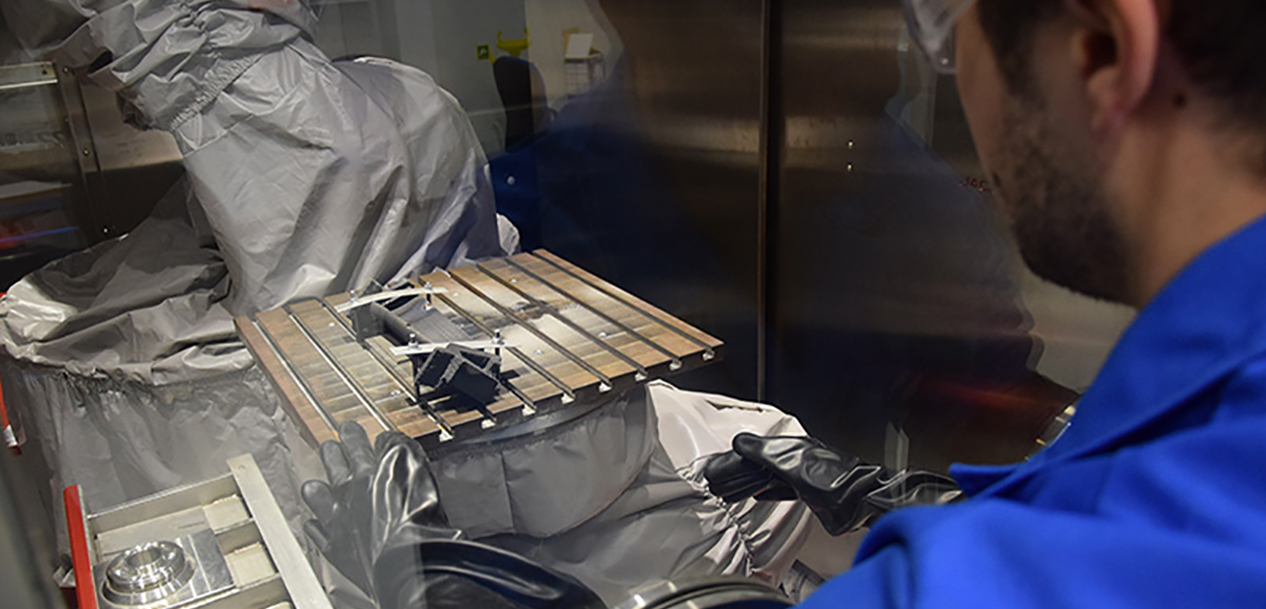
Cameri is Avio Aero’s center of excellence for additive manufacturing. The blade sets produced are designed for the low-pressure turbine of the GE9X - the most powerful commercial aircraft engine ever built - purpose-built for Boeing’s 777X. The GE9X is the most fuel-efficient engine in its class, delivering unmatched reliability and performance. At Cameri, GE9X blades are 3D printed using Electron Beam Melting (EBM) with titanium aluminide intermetallic alloy powder. Representative components undergo Non-Destructive Testing (NDT) via CT scan as in-process inspection to help ensure parts headed to final machining are free of internal defects.
Prior to introducing the AI algorithm, inspectors manually reviewed CT data and reported indications - a repetitive, time-consuming task. Now, the AI pre-reviews CT scan results and flags potential defects. Certified operators then verify the AI’s results, confirming indications and addressing any false calls. The result is faster, more consistent reviews while maintaining required quality standards.
“To achieve strong indication-detection performance, we conducted multiple training iterations of the AI algorithm using many datasets,” said Vincenzo, Senior Engineer, CTH for Electron Beam Melting.

Human oversight remains essential. Inspectors validate AI findings, guard against residual false calls and help ensure conforming EBM-printed blades aren’t mistakenly scrapped before they move to the next production phase. There, components undergo machining and additional quality control to meet rigorous industry and safety standards.
Before entering production in Cameri, the algorithm was successfully piloted on a representative batch. Claudia, Vincenzo and the team are now refining the model to further boost performance and extend its use across more applications.
See other posts
Avio Aero is a GE Aerospace company that designs, manufactures and maintains components and propulsion systems for civil and military aviation.