Aerospace isn’t just about cutting-edge technology, it’s about discipline, rigor, and the relentless pursuit of safety and reliability. Few careers embody these values more than Luca’s. With an aerospace engineering degree from the Polytechnic University of Turin, Luca began his professional journey in operations at a major Italian space company immediately after graduation. There, he worked closely with Space Agencies, contributing to an ambitious project: developing a pressurized module for Space Station Freedom, which later became part of the International Space Station program.
In the aerospace world, there is only one simple, uncompromising value: safety. In aerospace a single mistake can be fatal. On the ground, a specialized team meticulously reproduced the conditions astronauts would face in orbit, inside a pressurized and secure module - an environment designed to test procedures, equipment, and human performance.
Luca was selected to be part of this small, highly specialized team. Their work focused on manuals and procedures: they first wrote them, then trialed, tested, validated, and finally used them in real operations. Testing occurred on full-scale mockups with the same hardware intended for mission use. The team simulated the orbital environment underwater in a large pool specifically used for astronaut extra-vehicular activity (EVA). The goal was to familiarize with microgravity environment and full-body maneuvers activities with full-size replicas of modules and space hardware located in the pool. The pool was about 60 meters long, 30 meters wide, and 12 meters deep, and each training session typically included about 6 hours of underwater time.
They also conducted simulations in parabolic flight aboard the KC-135A, nicknamed the “Vomit Comet,” which creates microgravity by flying repeated parabolic arcs between 7,000 and 10,000 meters. After a steep pull-up at about 45 degrees, the aircraft performs a brief pushover that produces 15 - 30 seconds of weightlessness before a 45-degree descent and pull-out. A typical flight includes around 40 parabolas, with occupants experiencing about 2 g during the pull-up and pull-out phases. They also tested emergency scenarios and “unsafe” conditions using pressurized suits that constrained movement and vision, exactly as astronauts experience in orbit. Every interior object had to be usable with bulky gloves and refined them to the smallest detail, accounting for human factors and medical-engineering ergonomics.
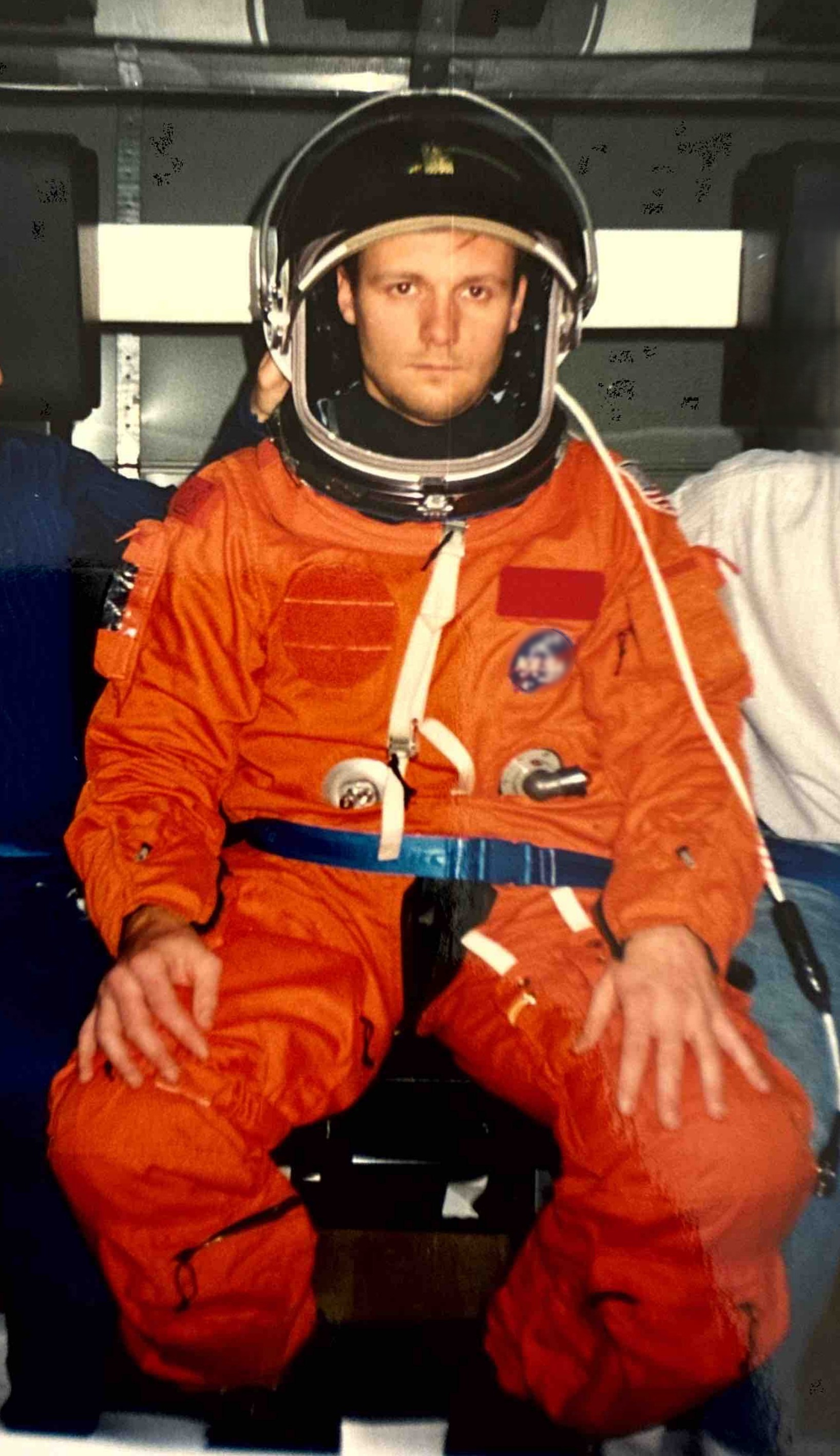
“Teams were obsessed over orientation labels essential in zero gravity, the placement of controls, quick-release mechanisms, and egress sequences ensuring that even in partial disorientation astronauts would be able to find and use critical buttons and paths easily” said Luca.
He and the team validated the module design and the procedures testing for different body types to account for size, spatial constraints, and the suiting and de-suiting process. They used stringent selection standards such as hyperbaric and hypobaric chamber trials, high-altitude simulation and training to recognize and manage hypoxia. Luca and the team led repeated donning and doffing tests across multiple configurations using anti-G suits to simulate ascent and reentry scenarios. Under the suit, there was a liquid-cooling garment with fine tubing connected to a controlled circuit to keep body temperature within tolerable limits. This work was intense by design, and it was all about anticipating real operational issues, preventing them, and ensuring that what flies is usable every day in space.
When that program concluded, Luca sought new challenges in dynamic, aeronautical settings. He joined Avio Aero, then called Fiat Avio, for an important international aeronautical program as a Logistics Manager. In this role, he handled design and maintenance across the entire lifecycle: procedures, manuals, and operational decisions that had to work as well in the desert as on ice.
“It’s a job I recall fondly, and it was also enriched by my contribution to other important programs at that time, definitely a demanding, formative experience that was system-wide in scope” added Luca.
After five years, Luca moved into commercial responsibilities. He began shaping proposals, scoping and selling turbine services, including aeroderivatives, to customers across Asia and the Middle East. He drove marketing and trade show efforts, and collaborated with local operators to bring markets closer, shorten lead times and improve cost competitiveness.
“In that role, the ongoing challenge was translating complex technical requirements into clear, sustainable and compelling value propositions for customers,” he said.
Today, Luca leads sales for modules, components and services for the CFM and TP400 engines and supports sales from the Borgaretto foundry. It’s a new, energizing challenge that requires a mix of knowledge in safety, quality, delivery, and cost with an end-to-end view of product and service lifecycles. What sets Luca’s path apart is his operational know-how in turning procedures and testing into real, measurable safety and then transforming it into customer value.
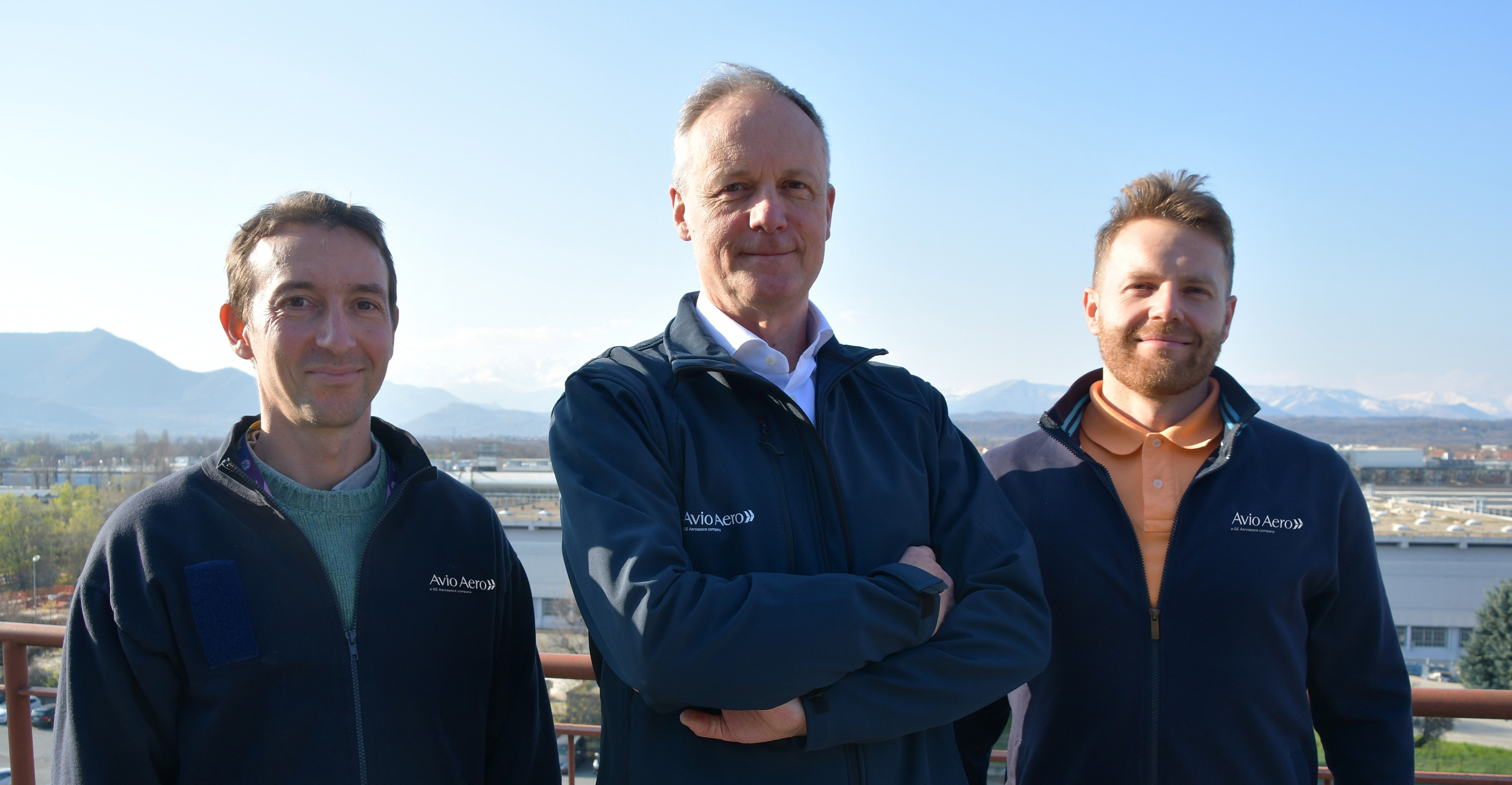
“My daily decisions are also still driven by the methods I learned in human spaceflight - 1:1 simulations, extreme environment testing, rigorous validation, and a constant focus on ergonomics and human performance” Luca continued. His expertise flows naturally into today’s aerospace frameworks and standards that guide how teams design for reliability, standardize for quality, prepare for the unexpected, and coordinate processes and people to meet schedules and budgets.
In Luca’s story, precision isn’t just a professional habit, it’s a mindset. It’s the connective tissue between space operations and advanced aeronautical programs, between testing and trust, and between disciplined execution and customer success. And it’s a reminder that the best technologies aren’t just engineered, they’re put into practice by people who never stop refining how work gets done.
See other posts
Avio Aero is a GE Aerospace company that designs, manufactures and maintains components and propulsion systems for civil and military aviation.