By its very nature, aerospace is one of the crown jewels of global manufacturing. It is an industry where the margin for error approaches zero—and where technological innovation is the baseline requirement to remain competitive. In that context, Italian industry plays a leading role, and Avio Aero—one of Europe’s key aerospace propulsion players and part of GE Aerospace—is a strong example.
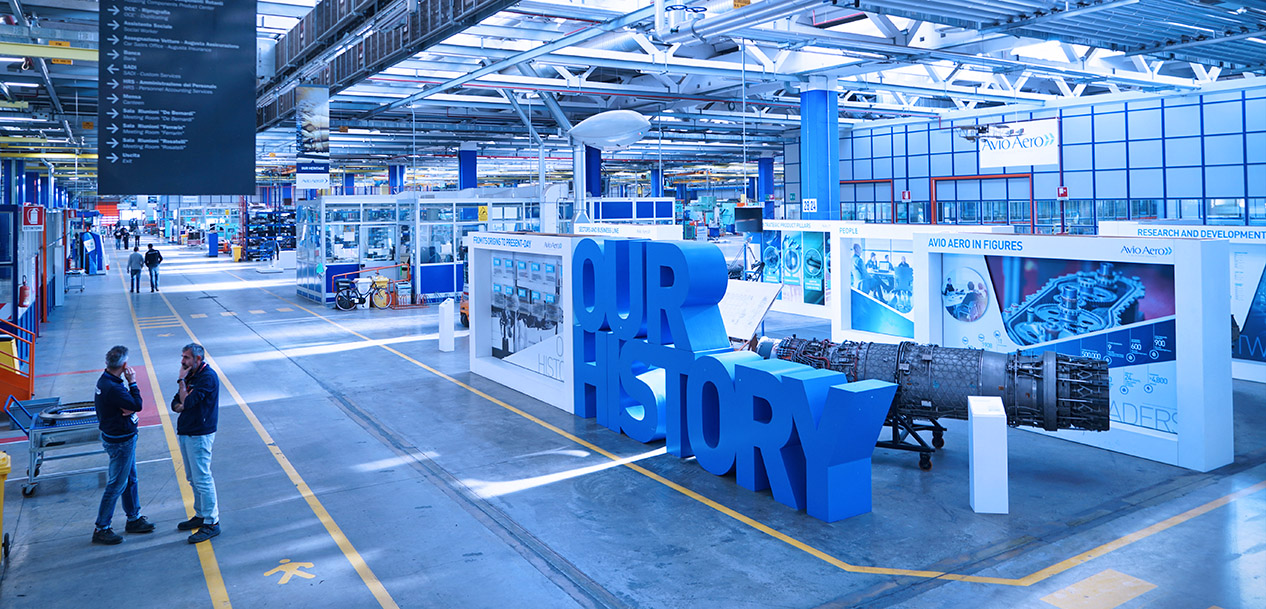
To understand how concepts such as Lean Manufacturing, the Digital Twin, and sustainability are applied in a highly complex, technology-intensive environment, the editorial team at Tecnologie Meccaniche went behind the scenes at the Rivalta di Torino facility. This is where critical propulsion components are made for both commercial and military aviation.
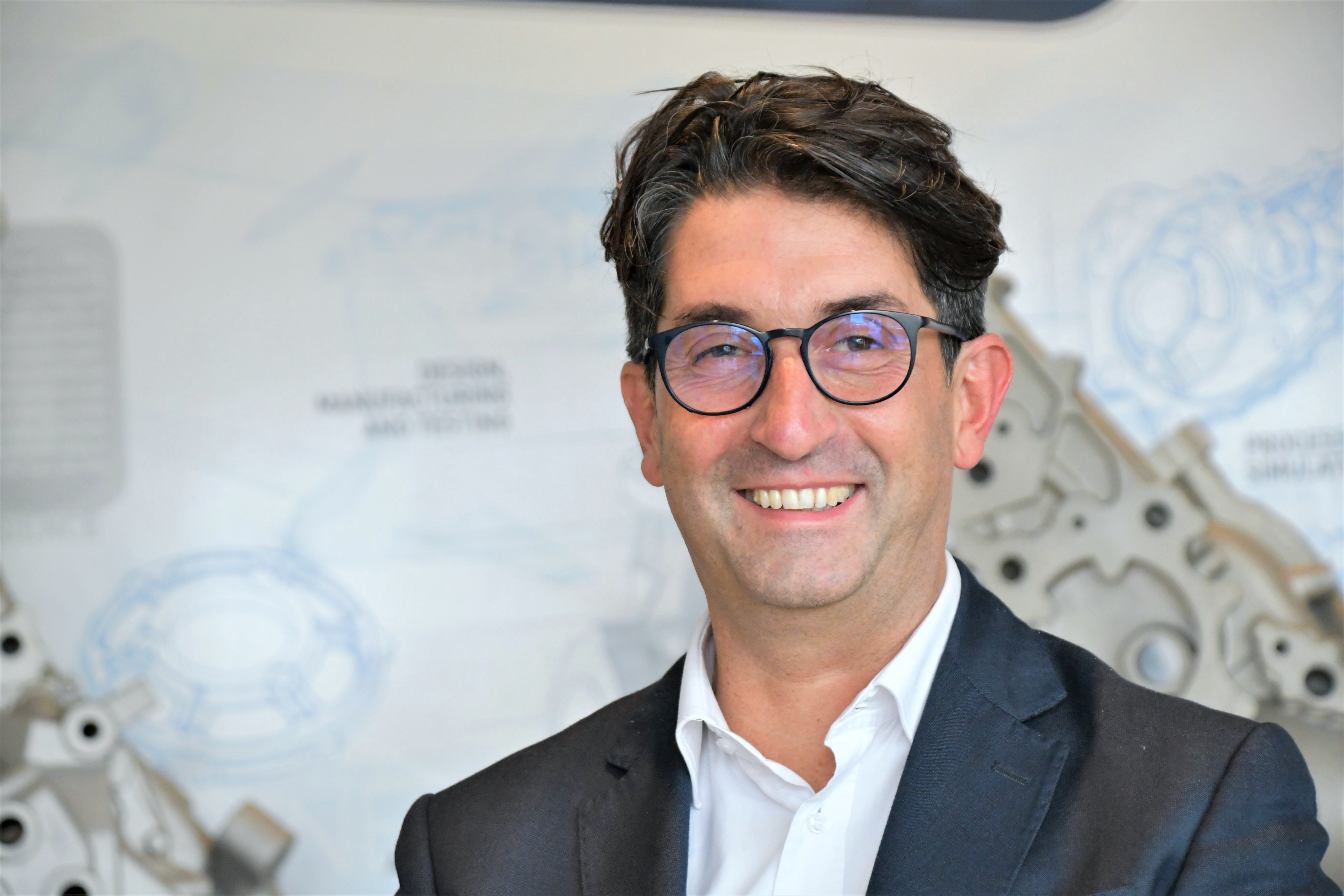
Guiding the visit is Damiano Mazzotta, Avio Aero’s Rivalta Site Leader, who outlines the plant’s production dynamics and its future challenges.
Production process: at the center of the organization
Rivalta’s operations cover every phase—from planning and initial sourcing through shipping the finished product to customers. The transformation process, where inputs such as raw materials and machining operations become finished parts, is the site’s cornerstone.
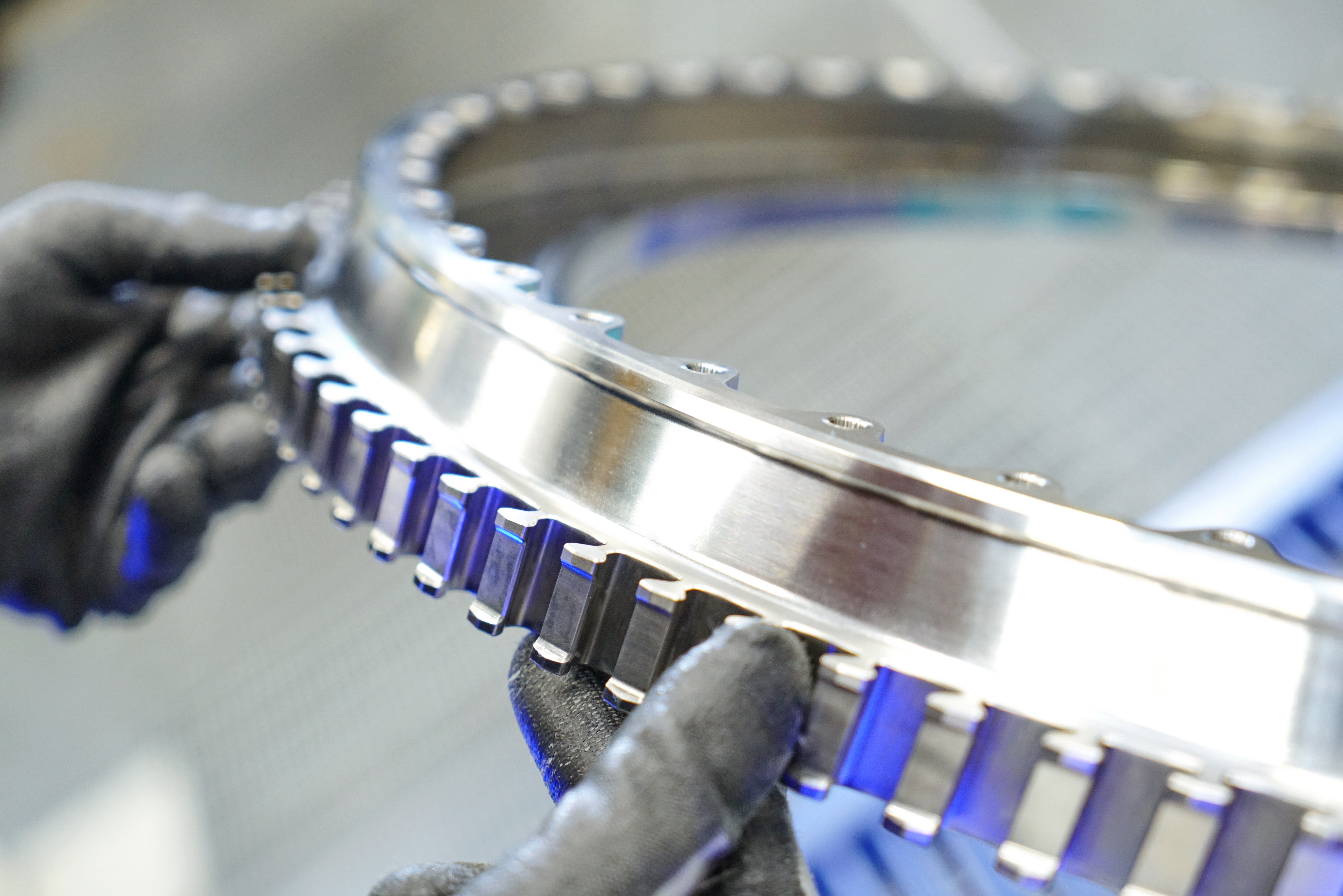
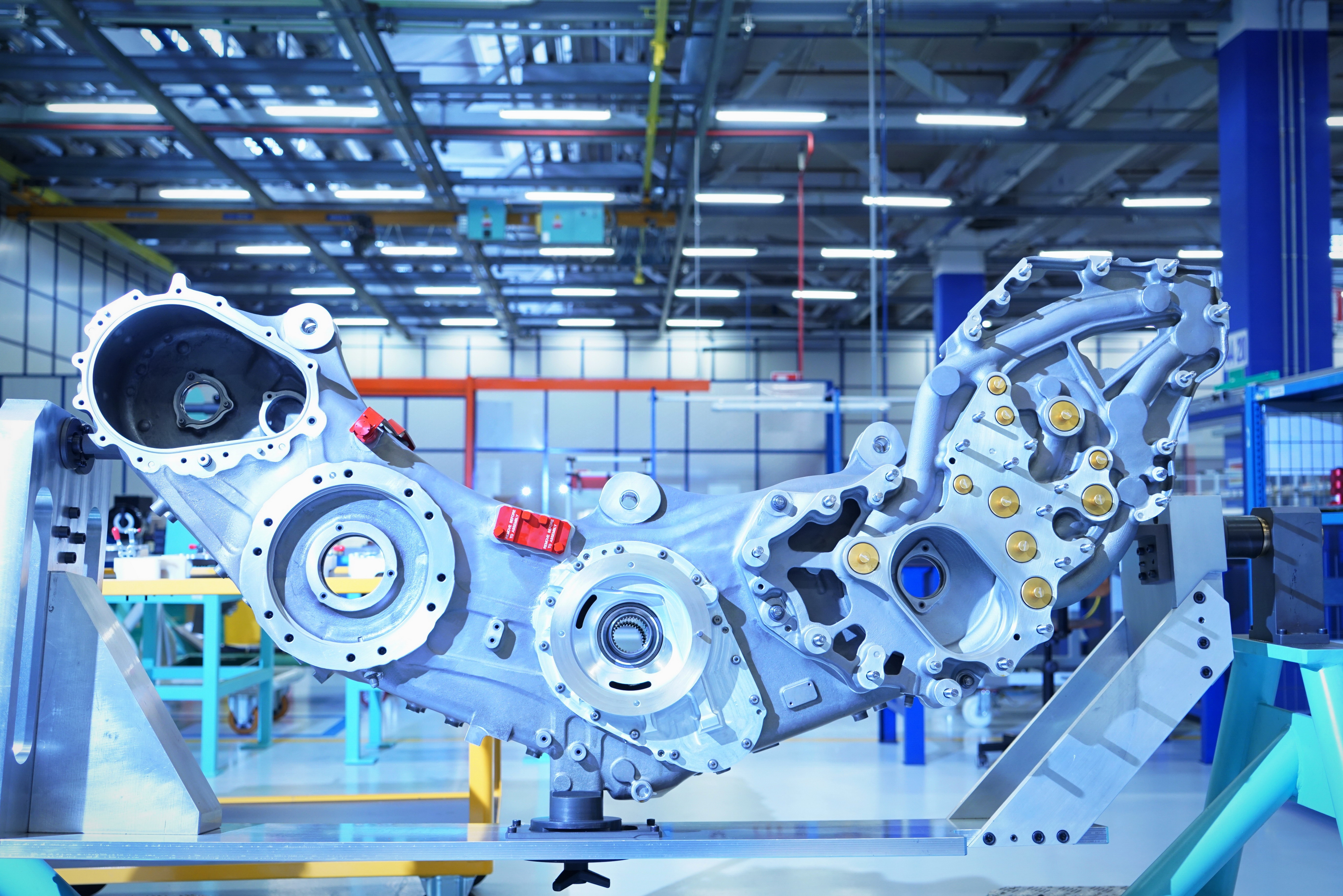
The products manufactured here are key propulsion components that fall into two main families: transmissions for various power applications, and accessories and rotating components that form an integral part of low-pressure turbine modules for commercial and military engines.
“The transformation process is at the center,” Mazzotta says, “but it’s the management approach that makes the difference. That’s why our production organization comes to life through FLIGHT DECK, GE Aerospace’s proprietary lean model.”
FLIGHT DECK works like a cockpit, setting a standard built around four priorities—always in the same order: SQDC, meaning Safety, Quality, Delivery, and Cost.
Applying FLIGHT DECK principles shapes Avio Aero’s culture and mindset: respect for people, continuous improvement, and customer focus.
Alongside these, a set of fundamentals defines the path to making products safely, with the required quality, on a precise delivery schedule, and at the right cost.
The system rests on eight fundamentals—a true operational backbone—capturing the Lean spirit and reinforcing a virtuous cycle of continuous improvement. “A key one is Standard Work,” the Site Leader explains, “which documents the best way to perform a process and enables us to measure deviations so we can trigger problem resolution when needed. Then there is Daily & Visual Management, used to track the most important indicators in terms of safety, quality, delivery, and cost, and a Value Stream Management approach that lets us visualize every step—from order to delivery—with the goal of reducing or eliminating non-value-added activities and driving improvement. These are complemented by operating cadences, structured problem solving, 5S for order and cleanliness, and the concepts of Flow and Pull: moving units through production without batching, avoiding waste and inventory, and launching production only in response to real customer demand.”
Digitalization: real-time data and Overall Equipment Effectiveness
In an era shaped by the Industry 4.0 transition, digitalization at Rivalta is a pragmatic lever to improve the SQDC pillars. The plant’s digital strategy fits into Avio Aero’s broader approach, where data is pervasive and supports every management and operating phase.
“Our digital strategy,” Mazzotta says, “is designed to have a tangible impact on safety, quality, delivery performance, and cost.
One of the most widespread, high-value applications is automated measurement of parts directly on the machine tools. That capability allows real-time process correction without requiring operator intervention: data is processed and made available across the organization, directly supporting higher quality and lower costs.”
Another major focus area is efficiency monitoring. Looking to the near future, Mazzotta adds: “Machine status and strategic downtime are continuously monitored through Overall Equipment Effectiveness (OEE) indicators. This approach helps us identify the main causes of downtime and activate immediate countermeasures. And by visualizing data on boards and large screens, the entire team can see production status in real time—preventing negative impacts on deliveries.
We are also rolling out new procedures aimed at implementing an advanced MES that will enable a Digital Twin of shop-floor processes, supporting operators at every stage—from planning through execution—to once again eliminate errors and waste.”
Automation and flexibility: high mix vs. low volumes
When it comes to automation in aerospace, volumes and variability are very different than in sectors such as automotive or home appliances, where high production numbers justify widespread plant automation.
At Rivalta—as at Avio Aero’s other manufacturing sites—automation is selective and targeted. At the same time, it must coexist with flexibility to meet specific market requirements.
“Automation is applied in cells dedicated to specific products,” Mazzotta explains. “We use automation in support of machine tools to reduce human involvement in repetitive activities. That delivers higher efficiency and productivity, but above all it provides the repeatability that, for us, is synonymous with uncompromising quality.”
That said, the right balance between automation and flexibility is essential. The market demands a high product mix and limited volumes—creating a complex challenge for both the supply chain and machine-tool builders.
“The need to create effective flow,” Mazzotta says, “is pushing us increasingly toward lines dedicated to different product families. It may seem contradictory—a reduction in flexibility—but it isn’t, because our resources still ensure productivity and adherence to takt time, a key Lean Production concept used to synchronize production to market demand and reduce waste and overproduction.
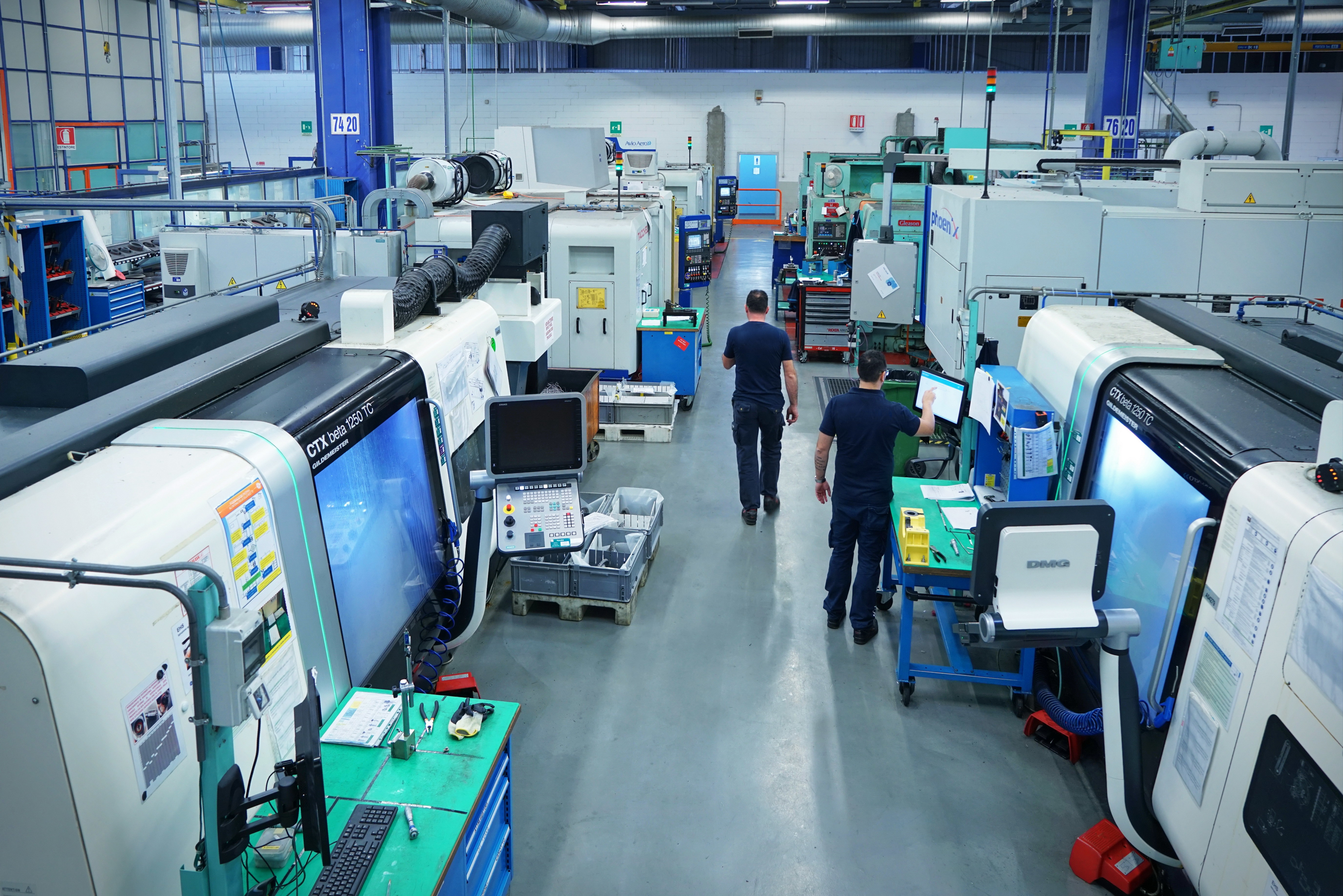
To make that possible, we ask our machine-tool suppliers for systems with very high precision and high dynamic performance that can be sustained over time. We need advanced in-process control capabilities and platforms that can integrate innovative technologies such as the Digital Twin.”
In short, Avio Aero’s message to equipment suppliers is clear: machines must be able to eliminate—or drastically reduce—changeover time, supported by innovative modular tooling that is inherently flexible, able to adapt to different geometries, and capable of handling a high product mix. “And we need interconnected systems,” the Site Leader adds, “able to communicate with upstream and downstream machines for predictive, real-time diagnostics—and to ensure immediate intervention by our maintenance teams or by the machine builder whenever an anomaly occurs.”
Safety, sustainability, and human capital
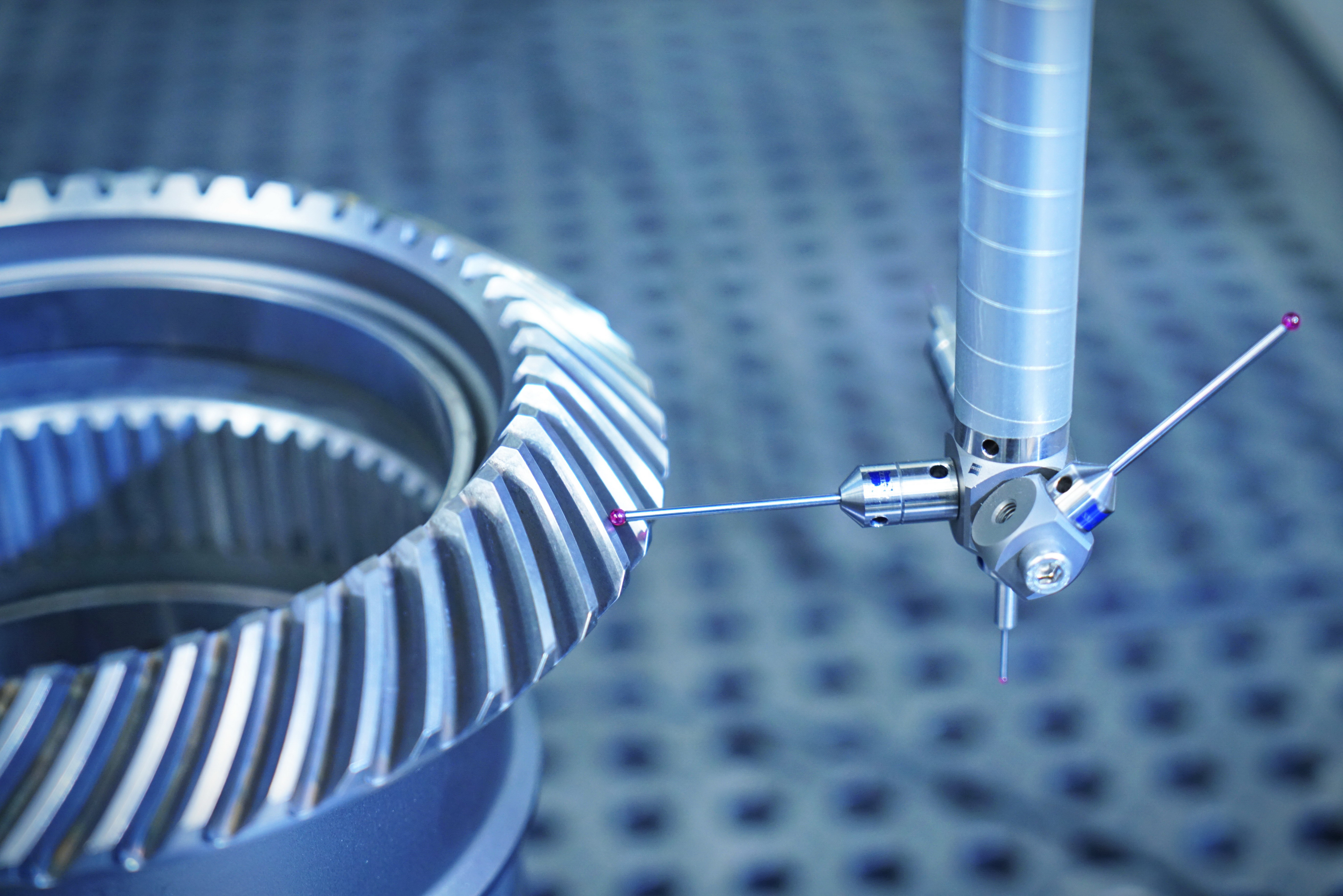
In aerospace, quality is directly tied to flight safety. Quality is a cornerstone of FLIGHT DECK and is ensured through state-of-the-art inspection processes. The site has moved from visual checks to coordinate measuring machines (CMMs), which communicate in real time with machine tools—especially grinding machines—to automatically correct geometric variation and keep process capability within the desired range.
The evolution is not only technological, but also regulatory and cultural. “We are evolving from ISO 9100 to AS 13100, which calls for a Zero Defects culture. We are doing that through an APQP (Advanced Product Quality Planning) approach and tools such as DFMEA and PFMEA to manage risk proactively. In addition, we are transforming the traditional Quality Management System into a Safety Management System, focused on identifying and managing risk preventively—and extending this approach to our supply chain as well.”
To close, the interview addressed two cross-cutting themes: environmental sustainability and workforce training.
On the sustainability front, Rivalta is implementing concrete actions supported by a Lean culture that is well established at Avio Aero. For instance, in partnership with Edison Next, the site recently installed a photovoltaic canopy over the plant parking area, covering 16,000 m2 and generating 4.5 GWh/year from renewable sources. The facility also launched a major LED relamping plan expected to save 1.2 GWh/year.
Technical training is the last—yet equally important—piece of the Avio Aero picture. “Our most important asset is people,” Mazzotta concludes. “We work in partnership with technical institutes to design training paths aligned with our needs. Once they join the company, new hires follow a standardized program ranging from 200 to 1,000 hours for special processes, planning continuous skills development.”
Originally published in Tecnologie Meccaniche
See other posts
Avio Aero is a GE Aerospace company that designs, manufactures and maintains components and propulsion systems for civil and military aviation.